- India's Leading Brand For Industrial Plants | Heavy Equipment | Industrial Dryer | Grinding & Mixing

Semi Continuous Batch Pyrolysis Plant
Home » Industrial Plants » Semi Continuous Batch Pyrolysis Plant
A Semi-Continuous Batch Pyrolysis Plant efficiently converts waste materials like plastics and tires into valuable fuel products through a controlled, eco-friendly thermal decomposition process. It offers improved automation, reduced downtime, and consistent output compared to traditional batch systems.
Semi Continuous Batch Pyrolysis Plant
A Semi Continuous Batch Pyrolysis Plant is an advanced waste-to-energy system designed to thermally decompose organic waste materials—such as waste plastics, rubber, and tires—into valuable by-products like pyrolysis oil, carbon black, and syngas. This plant combines the flexibility of batch processing with the efficiency of continuous operation, offering reduced downtime, faster cycle times, and improved energy recovery.
The process involves indirect heating in a low-oxygen environment, ensuring clean conversion with minimal emissions. Unlike traditional batch pyrolysis plants, the semi-continuous design allows for automatic feeding and slag discharge, improving safety, operational ease, and productivity.

Description
The Semi-Continuous Batch Pyrolysis Plant is an innovative waste-to-energy system designed to process materials like waste plastics, rubber, and used tires into valuable outputs such as pyrolysis oil, carbon black, and syngas. This type of plant bridges the gap between traditional batch and fully continuous systems by offering automated feeding and discharging while maintaining batch-based operation.
It operates under a low-oxygen, high-temperature environment, breaking down complex waste materials into useful fuel components in an eco-friendly and energy-efficient manner. The semi-continuous design allows for reduced downtime between batches, higher throughput, and safer, cleaner operations.
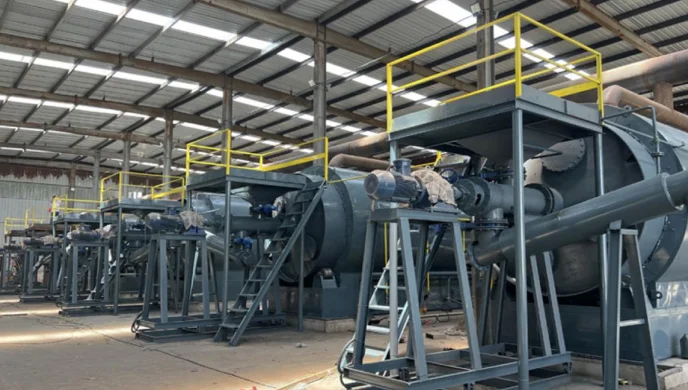
Working Principles of Semi Continuous Batch Pyrolysis Plant
The Semi-Continuous Batch Pyrolysis Plant works by thermally decomposing waste materials like plastics, rubber, or tires in an oxygen-free environment. Raw materials are loaded into a sealed reactor using a semi-automated feeding system. The reactor is then indirectly heated to temperatures between 350°C and 550°C, causing the waste to undergo pyrolysis. During this process, the materials break down into vapor-phase hydrocarbons, which are then cooled and condensed to produce pyrolysis oil. Non-condensable gases (syngas) are separated and often reused as fuel for the system, making the process energy-efficient and cost-effective.
Once pyrolysis is complete, solid residues such as carbon black and metal (from tires) are automatically discharged using a slag removal system. The semi-continuous design allows feeding and discharging to occur with minimal interruption between batches, reducing downtime compared to traditional batch plants. This method ensures higher productivity, lower labor requirements, and a more stable output, making it ideal for medium- to large-scale waste-to-energy operations.
technical Specifications
| Item | Details |
| Available raw materials | Wastetyres, waste rubber, medical waste, municipal solid waste, coal tar, oil sludge |
| Final products | Pyrolysis oil, carbon black, steel wire, combustible gas |
| Model capacity | DY-C-12T, DY-C-15T, DY-C-18T, DY-C-20T |
| Reactor material | Q345R/Q245R boiler plate + 3045/316 stainless steel |
| Thickness | 14mm/16mm/18mm |
| Heating fuel | Direct heating by fuel oil, gas, coal, wood, etc. |
| Cooling type | Circulating water cooling |
| Floor area | Takes 20-ton machine as an example, 450-600 square meters |
Features
- Allows continuous or scheduled feeding of raw materials without interrupting the process.
- Combines the benefits of both batch and continuous systems for improved efficiency and flexibility.
- Operates in an oxygen-free environment to reduce harmful emissions and ensure clean processing.
- Reduced manpower, fuel efficiency, and minimal downtime contribute to overall cost-effectiveness.
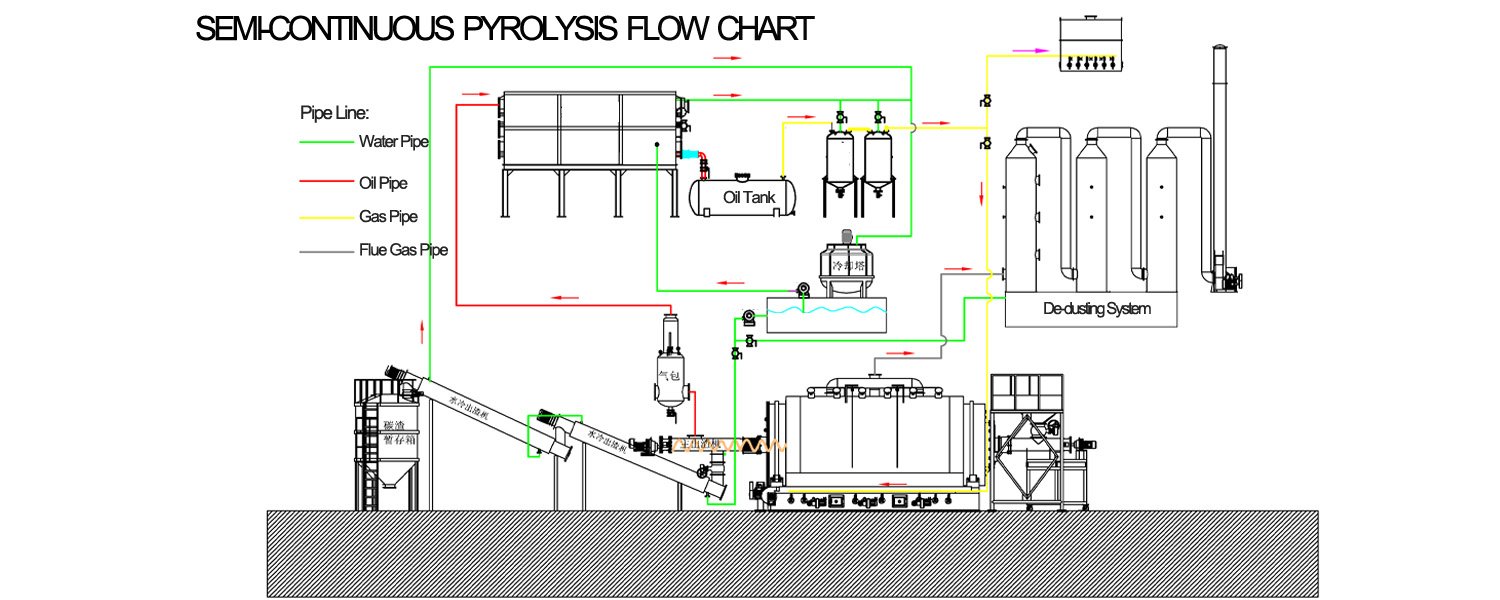
Overview
A Semi-Continuous Batch Pyrolysis Plant is an advanced waste-to-energy system designed to convert waste materials such as plastics, rubber, and used tires into valuable products like pyrolysis oil, carbon black, and syngas. It operates by heating the waste in an oxygen-free environment, causing thermal decomposition without combustion.
This type of plant combines the simplicity of batch processing with partial automation found in continuous systems. It features automated feeding and residue discharge, allowing for smoother operation and reduced downtime between batches. The semi-continuous design improves efficiency, lowers labor costs, and ensures steady output, making it ideal for medium-scale industrial applications focused on sustainable waste management and energy recovery.